The Rest of the Story.
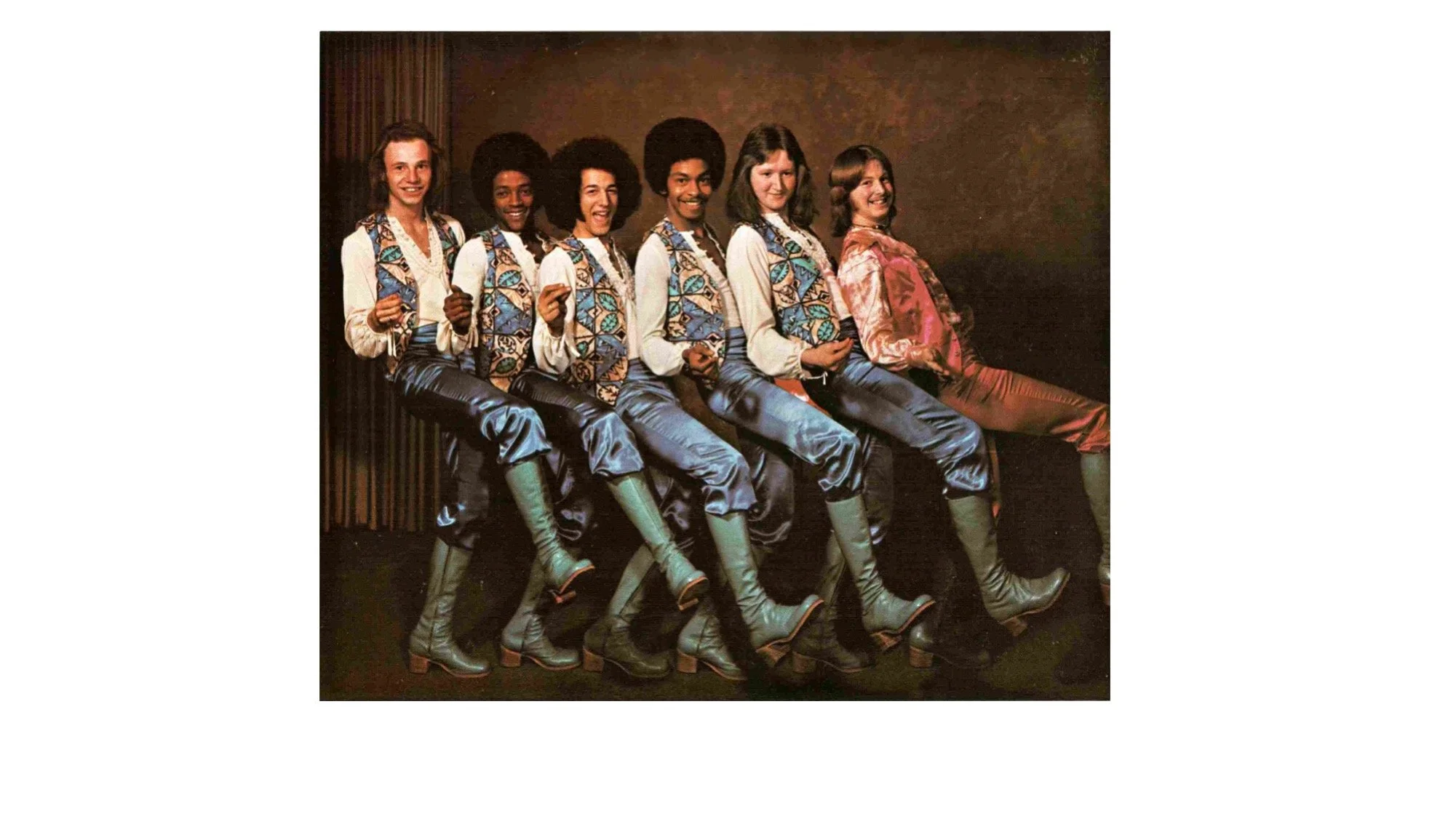
Long before I wrote screenplays, I played keyboards in rock bands. Here’s a photo of one of them. That’s me, third from the left, with the Jewfro. I’m really workin’ it!
Most of the bands around us played the Top 40 hits, trying to sound as much like the records as possible. We went through the albums instead, looking for songs we loved that people hadn't heard a hundred times before.
It turned out audiences liked hearing something familiar without it being exactly what everyone else was playing. We built a following. The clubs noticed. And somewhere along the way I learned a lesson I've carried into screenwriting:
Give people something they recognize.
Then give them something they haven't seen before.
So I went to film school.
I studied English and Drama at the University of Alberta, then headed to New York to earn an MFA in Film Production at NYU. After that came Los Angeles and a Screenwriting Fellowship at the American Film Institute.
I learned structure, character, dialogue, visual storytelling—all the things you're supposed to learn. Then I spent the next several decades discovering that learning the rules and becoming a writer aren't quite the same thing.
Playing music had already taught me something about craft. When you're learning an instrument, you're conscious of technique—where your fingers go, what comes next, whether you're doing it correctly. Eventually, if you practice long enough, you stop thinking about technique and simply play.
I think writing works the same way. Craft matters enormously. But ultimately it has to disappear into the storytelling. When this happens, it’s what musician’s call a peak experience. Time stands still.
Essential Equipment
At NYU, the first cameras we were given were 16mm Bell & Howell Filmos, which had to be wound with a special crank key.
Over the years, the keys had a habit of disappearing—which eventually would have rendered the cameras useless.
Then one day, someone accidentally pulled the doorknob off the equipment-room door and discovered that it fit the cameras perfectly.
From then on, whenever we checked out equipment for a film shoot, we were handed a camera, tripod, light meter and... a doorknob.
Then I started making movies and TV shows.
Film school gave me a foundation in craft. Working in film and television gave me the chance to build on it.
I wrote for television, created and produced a television series, worked as a development executive, and produced independent features and television programs. Along the way, I worked with actors, directors, writers, broadcasters, distributors and financiers—and saw how many different perspectives can shape what ultimately appears on the screen.
I’ve produced nine feature films, six television series, six documentary programs, one factual series and, yes, even a game show (featuring writers!). Every project gave me a different view of the same thing: story.
As a writer, you're trying to create it. As a development executive, you're trying to strengthen it. As a producer, you're trying to protect it while actually getting it made.
Eventually, all those different perspectives found their way back onto the page.
Validation?
This is a true story. One of the films I co-wrote and produced was randomly reviewed by a neo-Nazi website.
They hated the movie. I mean, they really hated it—which I suppose was kind of on brand.
After thinking about it, I decided that was probably the inverse equivalent of getting a rave review from a normal movie site.
I felt much better.
It’s been a great ride.
Eventually, I realized that being a better writer wasn't just about craft and virtuosity. Everything fed into it—the years making films, the places I've lived and traveled, the people I've worked with, raising a family, playing music, the things that went right and, probably even more useful, the things that didn't.
Some of it became material— quite literally. My family's experience with infertility found its way into Dark Mother. Parts of my adolescence—including a period of temporary blindness—found their way into Toad Beach. Living half the year in the California desert gave me the setting— and the social landscape— of Rancho Mirage. And an entire time-travel comedy began with two words I spotted once on a bumper sticker: Time Tourist.
The projects may look very different from one another. A psychological thriller. A contemporary noir. A coming of age dramedy. A broadly comic time travel yarn. But in every story, I'm usually looking for the same things: complex people making questionable choices, something unexpected in a familiar form, and something behind the entertainment that’s worth thinking about.
Everything is potential material. The trick is figuring out what the story is really about— and making people laugh, cry and think while they watch it.

Where to go next?
These days, most of my time is spent writing. Some of it on my own projects, some of it developing ideas with other people, and all of it trying to answer the same basic question: What would make this a better story?
I’d dearly love to see one of my specs get made, but I’m also interested in feature and television assignments, rewrites and adaptations—particularly projects where a distinctive point of view and a little creative problem-solving can make the difference.
I appreciate notes (unless they’re silly ones about bald people). And I like working with smart, passionate collaborators who care as much about what a story is really about as they do about keeping an audience entertained.
If that sounds like you, maybe we should talk.
Representation
Tamer Ahsan · Zero Gravity Management
tahsan@zerogravitymanagement.com
Direct Inquiries
Josh Miller
jmiller@panaceaentertainment.com
There simply aren’t enough books about screenwriting, so I wrote one too.
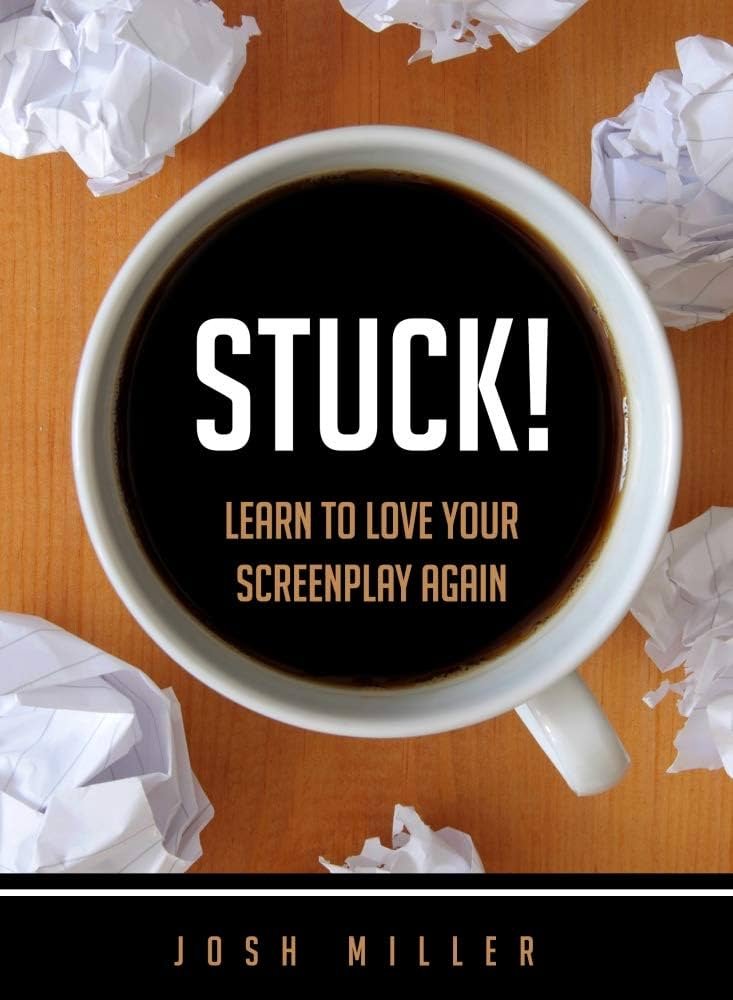
Several years ago, I wrote STUCK! Learn to Love Your Screenplay Again.
It began as something of a survival manual for myself—a collection of ideas for those moments when a screenplay stops cooperating and you begin wondering why you ever thought writing one was a good idea.
Eventually I realized other writers might find it useful too. A publisher agreed, and poof—it became an actual book.
At heart, it’s about staying inspired, solving problems and pressing on—which, come to think of it, is still a pretty good description of how I approach writing.